

.png)


Why SEO Traffic Fails Without Conversion Strategy (And How Agencies Fix It)
Recently we watched a food packaging companies their traffic spike.
New visitors flood in.
And conversions?
Flat.
Why Ranking Alone Doesn't Equal Revenue
SEO traffic fails without a conversion strategy. A lot of E-commerce sites fall into the trap of ranking for informational keywords that attract researchers instead of buyers. Even when the right visitors land on product pages, structural problems like enquiry forms above the fold or buried "Add to Cart" buttons stop them from converting. Local SEO strategies will also fail to deliver any tangible results, no matter how much money you spend.
A common issue in the E-commerce world is that traffic grows while conversions barely move because the content strategy focused on how-to guides and general information instead of commercial intent keywords, and the page design makes it unclear how to actually buy.
The fix requires auditing every ranking keyword to separate informational from commercial terms, restructuring product pages so buying is obvious, consolidating blog content to focus on fewer high-quality posts that support commercial pages, and tracking conversions and revenue instead of just rankings and traffic.
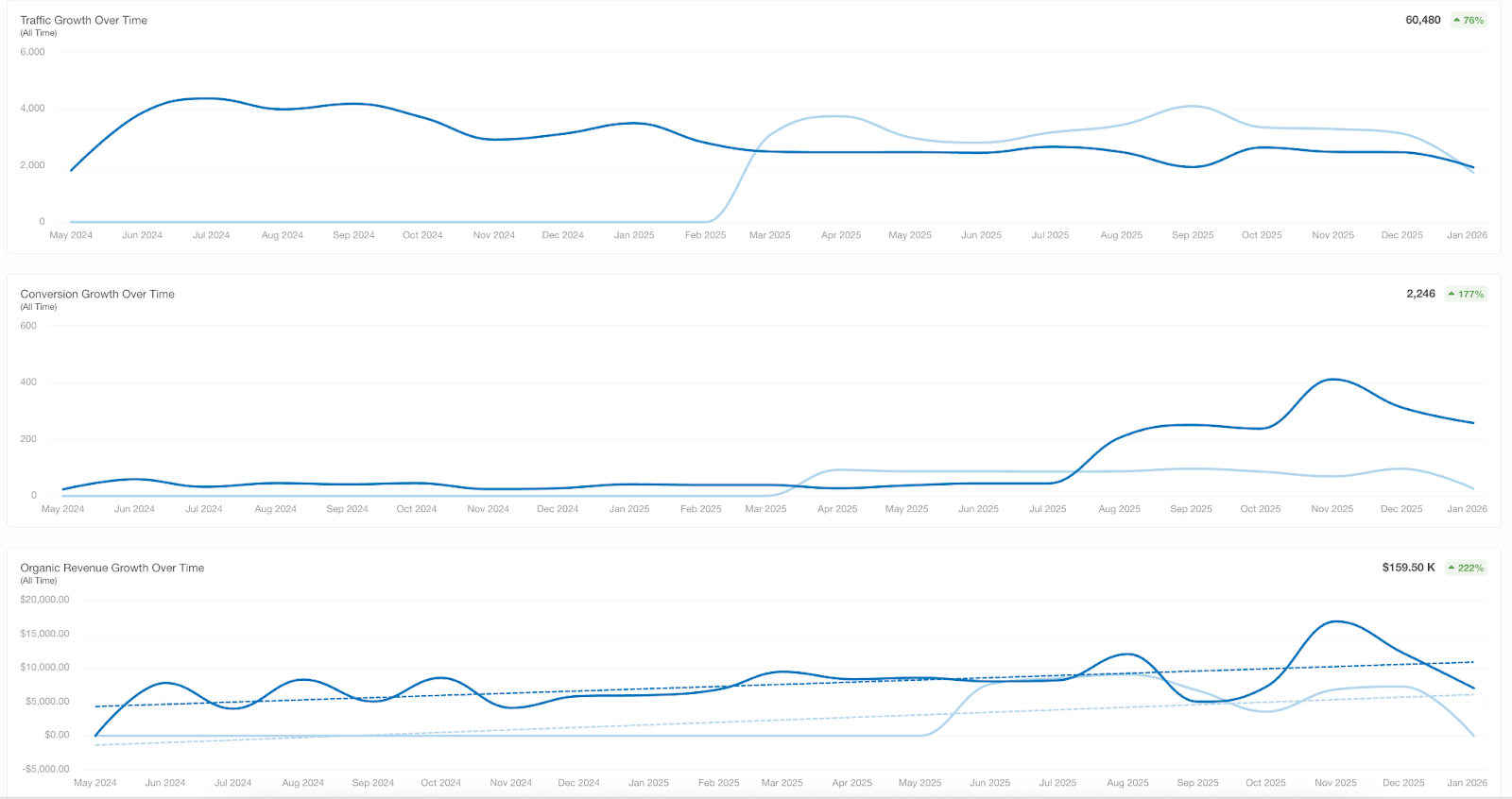
Done properly, this shows results in 6-8 weeks and can drive conversion increases of 177% and revenue growth of 222%, as reported by David Krauter in the following case study by Websites that Sell - who is a digital marketing agency specializing in Web Design, Development, SEO, Google Ads, Meta Ads and Social Media Marketing servicing Australian business owners across Brisbane, Sydney, Melbourne, Perth, Adelaide, Sunshine Coast & the Gold Coast.
Spoiler alert… here’s the big learning curve as quoted by the team:
“For us SEO on the Gold Coast and any other campaign isn't about more traffic. It's about the right traffic, pages that actually convert, and a content strategy built around making money.”
The Food Packaging Company that Ranked for Christmas Recipes
This client sold vacuum sealers, food storage bags, and commercial packaging supplies.
Products people research heavily before buying.
Average order value: $50-$1500+.
Their blog was ranking beautifully. Christmas food inspiration. Environmental policies around food packaging. How-to guides about food safety.
All informational. None of it commercial.
They were attracting home cooks looking for recipe ideas, not businesses shopping for packaging equipment. Traffic looked great in Google Analytics. But these visitors weren't buyers.
Data from their search console showed that the top-ranking keywords were attracting tyre-kickers who'd never convert. The content strategy was wrong from the start, and they’d actually built an audience that didn't need their products.
When your product page looks like a B2B enquiry form
For those users looking to buy, there was still one major roadblock.
An enquiry form sat at the top of every product page.
The "Add to Cart" button was halfway down.
So visitors landed, saw the form, and thought they needed to request a quote. They assumed it was wholesale only. They didn't realise they could just buy it.
The page was saying: "You need to talk to sales first."
The business wanted: "Just add it to cart and check out."
This happens across E-commerce sites all the time. The page structure accidentally signals B2B when the business is B2C. A/B testing button colours won't fix this. The whole page needs rebuilding.
The keyword intent shift that changed everything
Their rankings showed the problem immediately.
They were ranking for:
- "How to store food safely"
- "Christmas food inspiration"
- "Environmental packaging policies"
These are informational queries. People researching, not buying.
The shift went to commercial terms:
- "Vacuum sealer"
- "Food packaging supplies"
- "Food bag sealer"
- "Commercial vacuum sealer"
Different intent. Different visitor. Different outcome.
The fix wasn't just optimizing existing content for these terms. It meant rebuilding focus pages around commercial keywords, aligning title tags and content structure with what Google rewards for buyer intent, and killing off blog posts that were attracting the wrong audience.
Some content got merged. Some got deleted entirely.
This is how agencies build predictable lead pipelines instead of just chasing informational traffic that looks good in reports but doesn't convert.
From 20 blog posts to one (and why it worked)
Most agencies tell you to publish more.
Post consistently.
Feed the algorithm.
This client cut their output to one post per month.
Publishing 20 blog posts a month sounds productive. It's not if most of them just sit there doing nothing. This client was writing about environmental topics and general food safety. None of it connected to their products.
One high-quality post per month, properly siloed and optimized for that silo, made more sense. Longer. More detailed. Actually about the problems their products solved, supported by proper internal linking to product pages.
Tests across multiple clients show that fewer high-quality posts targeting commercial intent outperform volume-based strategies targeting informational keywords. Less content - better results.
How Agencies Actually Fix This
Pull every keyword your site ranks for.
Separate the informational ones from commercial ones.
Most sites rank for dozens of terms that will never convert.
Check what visitors see first on your product pages. If it's an enquiry form, a long paragraph about your company, or anything that isn't the product and how to buy it, that's your problem.
Find blog posts that get traffic but don't convert. Merge similar topics. Delete the irrelevant ones. Stop publishing for the sake of publishing.
Put customer reviews on product pages. Make sure "Add to Cart" is visible without scrolling. Link from blog posts to service pages. Don't assume people know how to buy from you.
Track conversions and revenue, not just rankings and traffic. If your rankings go up but sales don't, something's still broken.
After Websites that Sell rolled out this strategy, the client saw changes in 6-8 weeks. Ten months later: traffic up 76%, conversions up 177%, revenue up 222%.
Why This Matters for Local Service Businesses
Local service businesses make the same mistakes.
They rank for "how to fix a leaking tap" when they need "emergency plumber Gold Coast."
They write blog posts about home maintenance when they should focus on their service pages.
Informational content builds authority. It gets you into the consideration phase. But if that's your entire strategy, you're just attracting people who want free advice.
The shift from informational to commercial is what turns SEO into actual revenue. It's the difference between reporting traffic numbers in meetings and reporting profit.
If your agency only talks about rankings, ask them about conversions. Ask how many visitors turn into customers. If they can't answer that, they're measuring the wrong thing.
Stop Optimizing for Traffic
If your traffic's up but revenue isn't, your rankings aren't the problem.
It's what happens after someone lands on your site.
The agencies that get SEO right build strategies around business outcomes, not vanity metrics.
Cover Photo by olia danilevich


.svg)


